Monday, December 10, 2012

The Heart of the Matter

Although, the idea of "late" does not exist in Fiji, our "Palagi" mind set sometimes chides us if we leave a bit later than planned.  We gather our "supplies" for the day near the front door anticipating what it may or may not hold for us -- think of Michelle Pfeiffer's purse in the movie, One Fine Day.  Recently, we laughed as we climbed in the truck and took inventory of all we had loaded: lunch, first-aid kit, Family Home Evening lesson, drinking water for the day, garden seeds for distribution, toy for a young child we'd recently met, plumbing supplies for a project in southern Taveuni, shovels, large cane knife (like a machete), Leatherman multi-tool, insect repellant, computer and teaching aids, shopping bags, scriptures, mail to be distributed (only one post office on the island), curriculum supplies, reading glasses for distribution, sewing machine and fabric, cameras, handi-wipes, phone, hymn book, and various pamphlets about LDS beliefs. Some, but not all these things fit in Annie's purse so if it takes us longer to load up and get away than expected, why worry?  Again, "late" just does not exist so we wonder why we sometimes get ruffled over the loading time and delayed departure.  By the time we're off, we really appreciate the blast of air conditioning the truck provides -- a true luxury that we never take for granted.

Somedays, we know what to plan for but other days just develop as we go.  Taveuni has brought new friends and varied opportunities to serve, but recently we had the opportunity of hosting a dear friend from Ba, Adi Tabualevu.  As an infant, her eye was injured when a piece of dry vegetation from the ceiling of her bure (hut/home) fell and stuck in her eye.  Her well-meaning aunt tried a home remedy and some combination of the two events caused her to go blind in that eye.
Rotary International paid her way to come to Taveuni for a free eye clinic they host each year where they do over 200 eyes surgeries, restoring the gift of sight to many.  Unfortunately, her condition was inoperable but the trip brought renewed friendship and a wonderful few days together.  We're not sure if she has ever had a "day off" or any kind of vacation so the sadness of her eye assessment was eased by our opportunity to be together and explore some of the natural attractions of Taveuni.

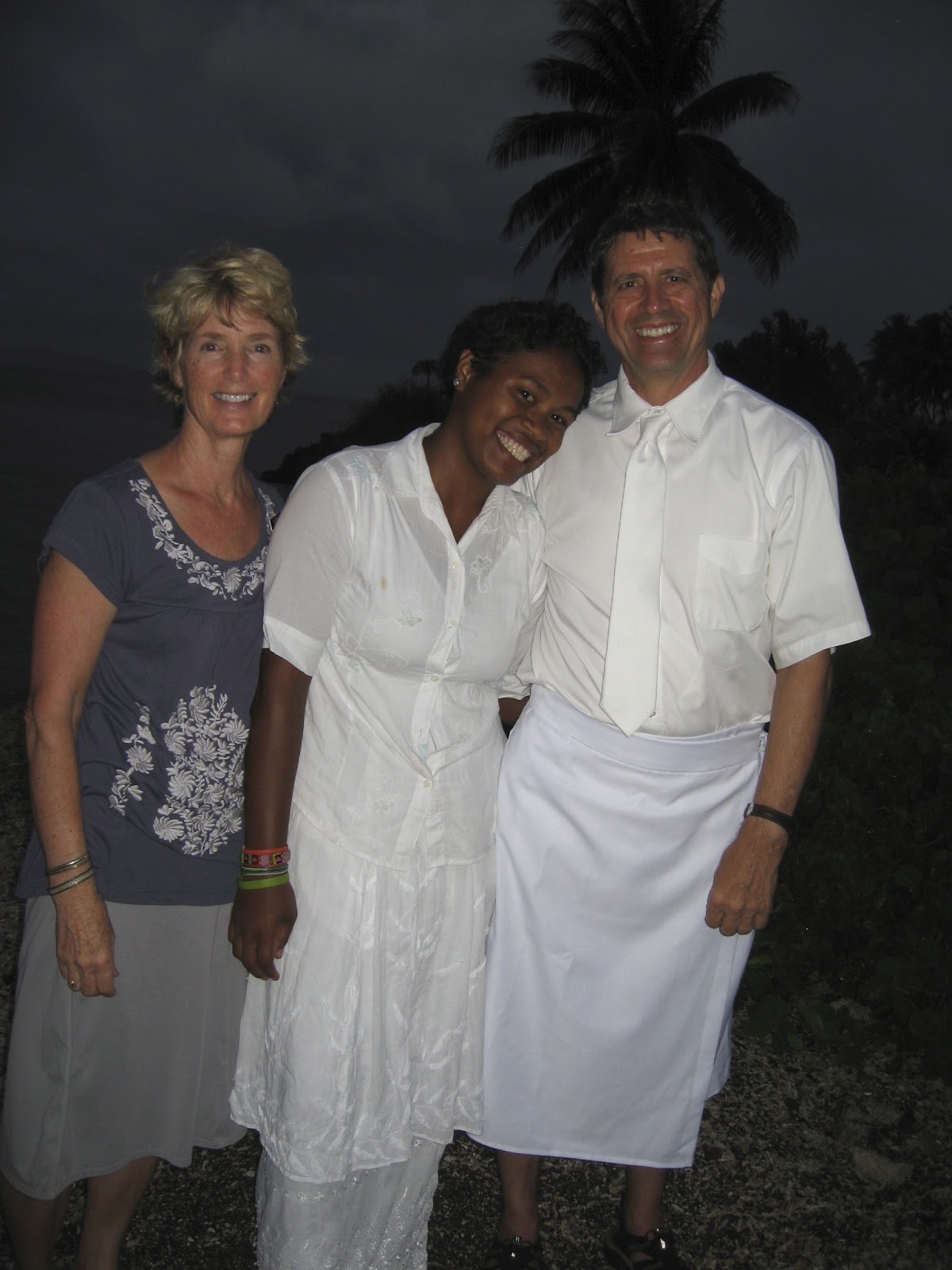
Adi's humility and goodness under difficult life circumstances was always an inspiration to us as we shared the gospel and helped her prepare to attend the temple for the first time.

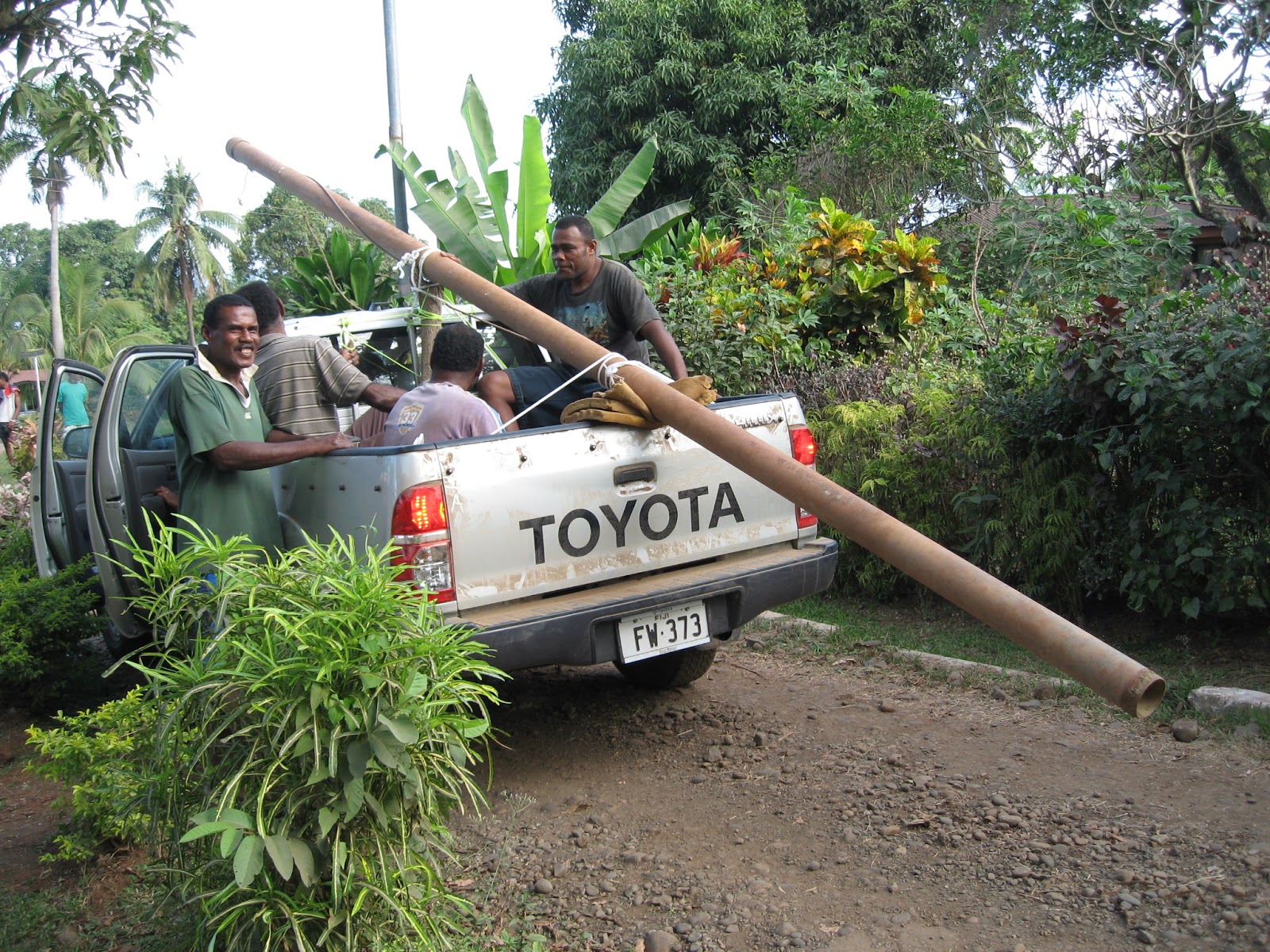
Adi and her family (3 boys) live in a modest tin home that has never had electricity.  She and her husband, a good man who cuts cane for a living, had saved and saved to be able to afford a power line to their home.  Her dream was to just have "one light and one power point" (outlet).  When it looked like purchasing the required pole, supplies, and government approvals might be out of reach for them she said she just went in the corner of her home and knelt down to ask Heavenly Father to intervene on their behalf.  Soon thereafter, a relative said she would give them a pole, left over from the flood damage in their village.  The Tabualevus couldn't afford to get the pole transported from that village to their home so we were able to get it with our faithful truck that has performed so well in many unexpected circumstances over the months.
The pole had been submerged in flood mud and weighed several hundred pounds
If it weren't for this guy's ingenuity, we never could have balanced the
pole on the truck - a feat that took a lot of engineering
Secure but shaky, we crept along the road to the Tabualevu house a several miles away
Final resting place of the power pole near their home -- happy day!
Once the pole was in place, our mutual electrician friend Rafele Vutaga (see previous blog) donated his expertise to do the wiring.  

Wired but waiting until $62 more can be earned for the final permit and fees
before their dream will become a reality 
Electricity won't modernize the kitchen where cooking is done over the
open fire.  Thirteen year-old Sikeli stayed home one day when his mom
was not well and fixed a breakfast of casava and lemon leaf tea
Sunday was a special time to have her travel with us to the southern tip of the island where she jumped right in teaching and speaking in church.  On Monday we headed to discover some of the beauties of the island, all new to us as well.

Lots of rain had swelled the river over the road but we just headed through

On way to Bouma Falls

Apparently not wanting to be unidentified if I drowned,
I unintentionally kept my name tag on 
Her first time to swim in the ocean, collect seashells and have a picnic -- she loved them all
On our way home we passed this medical facility that is about as big as this picture
and the cutest thing we have seen here.  Thanks to Rotary International for giving
this village a valuable resource.
Headed for the ferry to return to her home, we stopped at the International Dateline.
Friendship across time and culture
 As Adi left Taveuni, we felt again that though we have many varied opportunities in Fiji, the heart of what we do always centers around people.  We've grown closest to those we've served and taught.  While helping to improve the temporal circumstances of people is always fulfilling, in the end, the most important thing we do is to share the gospel of Jesus Christ which improves and gives meaning to life now and lasts for eternity.

Our primary purpose as missionaries is to: "Invite others to come unto Christ by helping them receive the restored gospel through faith in Jesus Christ and His atonement, repentance, baptism, receiving the gift of the Holy Ghost, and enduring to the end." Our mission theme scripture further highlights our commission: "Behold, I am a disciple of Jesus Christ, the Son of God.  I have been called of him to declare his word among his people, that they might have everlasting life" (Book of Mormon, 3 Nephi 5:13).  This is truly the heart of the matter -- the thing we do that is of most worth.

On our first visit to the southern district of Vuna, we met Ela at church.  She had been invited by a friend in the village and we were immediately taken by her bright smile and sincere interest.  She was drawn to Tom's conversion story as a young adult and requested that we begin teaching her. At our first lesson, her sister Ana joined us and thus began a wonderful relationship we'll always treasure.  Their young brother, Apatia was already a member and he sat in on occasion for the lessons.
Ela (21), Ana (16), and their brother, Apatia (12) -- a family of bright countenances
On the way to their home one day, we passed by an open door to a neighboring home where we found Litiana. No one seemed to be concerned or took notice of her culinary experimentation.
Learning to prepare roti can never start too young
Ana and Ela frequently take care of little Litiana and she loved her balloon ball
kindly made and provided by friends in America
We loved teaching these two sisters who were so intent on learning
Often extras joined us as we taught them.  This day, the sounds from a movie
we were playing drew them in.
Several months of meeting culminated with their desire to be baptized.  It was simple, and wonderful to gather by the sea with friends to witness their baptisms.  We might acknowledge their concern when they were sure they saw some large creature swimming nearby which they assumed to be a shark.  The young boys threw shells out at it so all would be safe and also checked the sea floor for spiny things.  All went well and we lost no one, and we added a beautiful daughter of God to His fold.


Because Ana had been sick, a few days later she was baptized in an evening service just as the sun went down.


Each week our bumpy rides to Vuna have brought blessings to us to know and love these young women and the wonderful members there, many of whom live and work on the copra plantation.  As the saying goes, "these are days never to be forgotten."

Wednesday, November 14, 2012

The Wise Man Built His House . . .

Upon a rock is a good place to build, but before flood #1 in Ba last year, Rafele's home was built on the loamy soil of a river bank next to the home he previously had built for his mother.  We came to love this family.
The Vutagas with their youngest son
As the water rushed in that January 2012 flood, there was little time to save belongings -- family first and a few other things were lifted through a roof panel and rescued.  Sitting on the roof in the dark they heard the rushing water take their home down the river, and across a field and road, depositing its wreckage around a tree a few hundred yards away. Positioned near a river which was swollen with push back from a high tide and heavy rains on lowlands near the ocean, this area was particularly ravaged by the flood with nearly every un-stilted home badly damaged. Shorty thereafter we met the Vutaga family as we delivered assistance to the many flood survivors. 
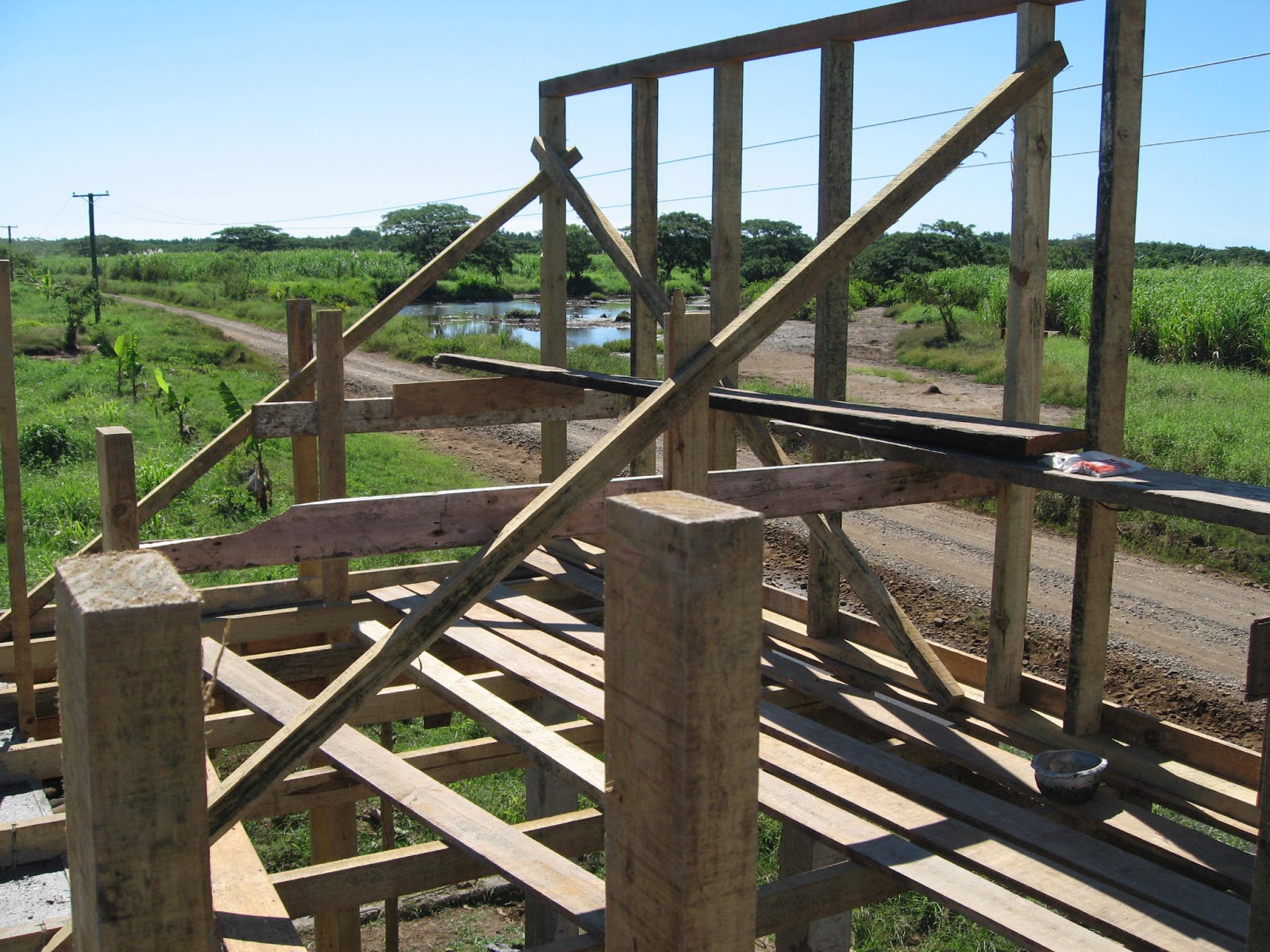
Picking themselves up in true Fijian fashion, Rafele began to gather construction supplies to build another home.  Materials were scavenged from the old home and "supplies" providentially ferried in by the flood. The LDS Church also assisted and before long enough materials were assembled to begin construction.  Two months after the flood, 6 foot pilings were standing erect anticipating a new structure higher off the ground.

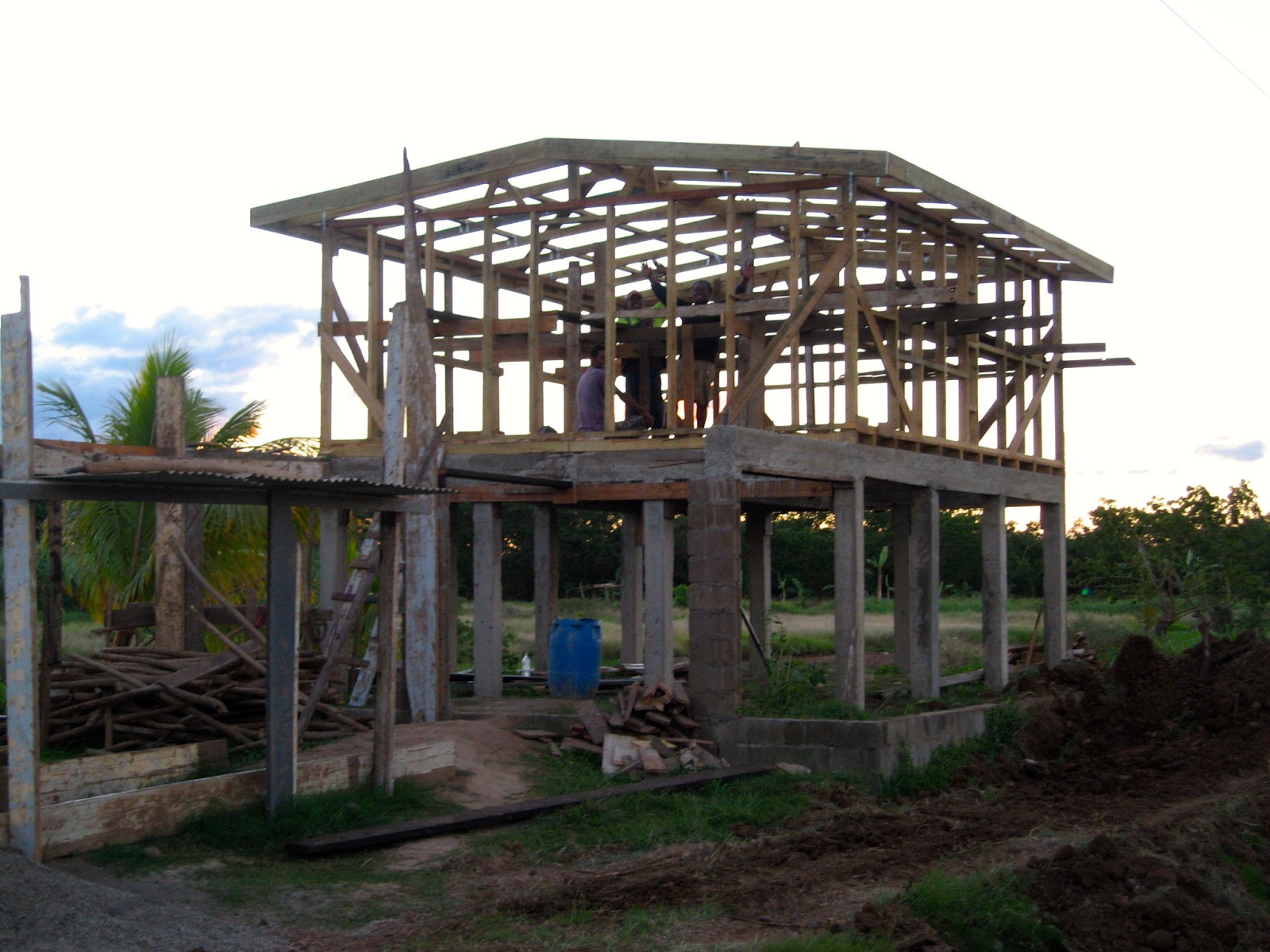
History was to repeat itself.  Night time slumber was again seized by flood #2 near the end of March and this time from the roof they watched all the new supplies and pilings disappear.  Morning light brought the reality that they had lost everything, again. This is a story we've wanted to share but had to wait through the months of its making.  For the next three months after the flood waters receded, Thursday mornings found us joining this tireless and creative man, along with his family and friends in building yet another home -- on rock (or at least, cement pillars).
Even before the flood waters had all dried up, the new home began to take shape.
Those trees on the far right once held pieces of their first home.
Only enough available money to buy wood for one pillar casing at a time.  After
the cement dried, they disassembled the casing and built the next.
Hand mixing the cement and carrying it to the pillar casing in a small tin pan kept up with
the available wood for casing construction -- one pillar per day.
The rounded top to this pillar need to be chipped away.  When we asked
where a chisel was, they pointed to a rusty nail on the ground.  Progress
was slow, real slow, so the next day we added a chisel to their tool box.

Cement reinforcement forms from rebar and heavy wire were all created by hand - it seemed to go on forever.  One day on our weekly service, Rafele told us how relieved he was to see us drive up since he simply could not face making another form.  After a short apprenticeship, we were on our own and this became our chief task for the next several weeks.

An electrician by trade, Rafele took leave from his job and devoted full time to rebuilding their home during these months.  In the flood plain near his home he also kept a casava field.  The daily diet of casava means continual planting to keep up with future needs and regardless of his home re-construction, the farming couldn't be neglected.  


The reason there were so many wooden and rebar forms to build was that
they were the main weight bearing structures.
While Annie straightened nails, Rafele trekked back and forth from the forrest cutting and hauling heavy, dense limbs to support and level the horizontal beam casings being filled with cement.  He did all this with his cane knife, one of the few tools he owned.  In fact, the whole home was built with surprisingly few tools (hammer, pliers, hack saw, cane knife, and pry bar -- that's it), and amazing ingenuity that made up for the dearth.
The wall of a cinderblock served tolerably well for straightening nails
Nails were always precious and in short supply, especially straight ones.  They repeatedly reused nails and Annie spent several days in this position pulling nails and convincing them to straighten up.  Once when we were out of nails, we asked if they had more in reserve, Rafele directed us to dig around in the dirt and we would likely find some old rusty but useable ones (another house once stood on this ground).  It was an early lesson for us that you didn't just run to the store when materials were needed.

No codes, no safety, and frightening little caution. What was scaffolding one day
(and we use the term lightly), became construction material the next.  Everything was
used and reused, straighten and re-cut, refashioned and re-fit.  Nothing wasted
and nothing purchased unless absolutely necessary.
Like the native builders, the wood was sturdy, rough cut and versatile.  Regardless of how thick, Pio cut each board with a hacksaw, the only available saw at the time. Hearty and fit, Pio warmed our hearts with his smile and gracious manner.  Every day, he was at his nephew's side guiding and lending his experienced hand to the project. Like others, he made us feel so welcome and appreciated that we always looked forward to coming.  Fijian Christian music was always a part of the happy and serene atmosphere during construction, whether coming from their home or our car we would enjoy their beautiful voices as we worked.  There was never any frustration or anger when challenges arose. Rafele would just smile and say, "No worries, we can fix it."

Rafele's mother's home on left had water half way up the windows during flood #2


While Annie nailed the roof supports, one of the workers said:
"We've never seen a Fijian woman do like this!"


The crew: Rafele, his brother Josefa, a friend, and Uncle Pio
Cast off stick supports would become firewood - nothing lost or wasted!
On occasion, we went to the mill for needed supplies.  No safety rules kept us from walking through the plant and mingling with workers amidst the amazing machinery.

Now that's a band saw blade!
Pio and Rafele left us to do the flooring for the house - it was really satisfying but the very last slot was out of square.  Hoping for an understanding foreman, we went back to the mill and asked if we could rip two boards at a certain wedged angle.  They got excited over the prospect as we pushed these 12 foot boards through a table saw in a dangerous maneuver we never would have attempted at home (no such thing as OSHA rules in Fiji).


While the flooring boards were green, rough and irregular, we coaxed them into place
with pry bars, sweat, and ingenuity.  In the end, they would be covered by something like a vinyl
oilcloth (they call it "carpet") overlaid with mats and no one would notice the flaws.
When the metal siding and roofing began to go up, we asked how they were cutting the metal so precisely since we knew they had no metal cutting tools.  They proudly demonstrated the "poor-man's" technique -- which would make any rich man envious.  Straight, true, and efficient they teamed up using a simple piece of wire and sheer pressure to make just the right cuts.

It was a sad goodbye to leave this great family and not see the home to completion - really one of the hardest farewells we experienced in Ba.  How we came to love this family and were heartened by their cheery and optimistic conquering of such difficult circumstances. You can imagine how delighted we were to get this next picture of their finished home. So beautiful and we hope it is never flood tested!
Moved in the 2nd week of October, 2012